Members of the military on active duty and veterans hoping to buy a home in expensive parts of the country have a lot to be thankful for this holiday season. Starting next year, they’ll be able to take out Veterans Affairs–backed mortgages as large as their bank accounts will allow.
Thanks to the Blue Water Navy Veterans Act of 2019, veterans will be able to buy larger homes in pricier communities without having to put down a cent. However, they must still qualify for their mortgage and be able to afford the monthly payments.
“It gives the veterans the opportunity to buy homes in the areas they want to be in,” says Austin, TX–based real estate agent Kyle Reed, of Pauly Presley Realty, himself a veteran who served in Iraq from 2001 to 2006. “It opens up some areas in cities to VA loans … that maybe veterans didn’t have access to before without putting a bunch of money down.”
Up until now, the size of a VA loan was capped at different amounts across the country. For example, borrowers could take out more in ultrapricey cities like San Francisco than in Detroit, where homes cost a whole lot less. As long as they stayed within those bounds, they could get a mortgage with a 0% down payment. But if they exceeded those limits, they had to put down 25% of the difference. The change goes into effect Jan. 1, 2020.
“There’s not a lot of VA buyers who are buying these very high-dollar homes, but there are some,” says mortgage lender Mike Villano of the Veterans Lending Group in Puyallup, WA, about 45 minutes south of Seattle. But “there’s a lot of places where these folks go and serve, and it’s very expensive.”
The problem is that not all lenders are likely to be comfortable making huge loans without imposing a few restrictions of their own. The VA typically backs up to 25% of a VA loan. So banks, credit unions, and other loan makers are likely to set up some rules to protect against defaults.
Some may require higher credit scores or debt-to-income ratios to qualify for the loans. And some lenders may even impose their own caps on how much money borrowers can take out.
In addition, mortgage lenders pointed out that the limitless loans will apply only to a borrower’s primary home. That can be problematic for those on active duty, who might buy a home near their base, get stationed somewhere else, and then choose to buy a second home in that location while renting out the first.
But if they already have a VA loan on another property, they can’t get the full perks of the loan on a second one. This means they may be on the hook for a down payment or can qualify for only a smaller loan for their new abode.
“It would really help a lot of families if they could retain their current home and still be able to purchase at their new duty station with no cap,” says Villano.
Ten years ago, many homeowners were desperately hoping to hang on to their homes. Others were doing everything they could just to scare up potential buyers. Meanwhile, said buyers were struggling to get financing from newly skittish lenders. Ah, memories. What a difference a decade makes!
It has, in fact, been the most consequential stretch in American real estate history, one that has fundamentally altered the landscape. Cosmopolitan coastal cities are out; affordable midsize cities are in. Baby boomers and Gen Xers are no longer the dominant forces in buying, ceding that turf to millennials. Yet after all this time, it seems that home buyers still can’t get much of a break, according to a new report from realtor.com®.
“In 2020, there will be opportunity for buyers, but in many ways the challenges they’ve faced for years are going to persist—challenges like difficulty finding the home that’s right for them, and competing with other buyers, especially in affordable price points,” says Danielle Hale, chief economist at realtor.com, whose team pulled together a forecast of housing trends for 2020.
In other words: The more things change, the more they’ll stay the same. A lack of homes for sale has been making things difficult for buyers since 2015, and next year, inventory could reach historic lows. And although single-family home construction is expected to increase 6%, it still won’t be enough to keep up with demand.
There is a bright side, though: Mortgage rates are expected to remain reasonable, at an average 3.85%.
Let’s take a closer look at the biggest factors that will shape the real estate market in 2020.
Affordability, affordability, affordability
OK, it’s not as catchy as “location, location, location,” but achievable price points will be key in the coming year, especially as millennial buyers solidify their position as America’s main home buyers (more on that later).
Now that we’ve apparently hit the ceiling of crazy price growth, it seems that buyers are just over overpaying.
“Many people would prefer to live in the San Franciscos and [other] big cities, but for the right price they will make the decision to go to another city,” says Hale.
Perhaps a city like, say, McAllen, TX, where sales are expected to rise 4.4% and home prices to appreciate 4% in 2020. Compare that with a 9.5% drop in sales for Las Vegas, and 1.1% decrease in home prices.
Texas, Arizona, and Nevada are expected to welcome an influx of home shoppers priced out of California. Meanwhile, would-be buyers from pricey Northeastern markets will likely head to the Midwest or Southeast. There, they can find affordable housing as well as solid, diversified economies.
Millennials mature into home buying
“The largest cohort of millennials will turn 30 in 2020—historically, that’s when people tend to think of buying their first home,” says Hale. The oldest millennials will be turning 39. By the middle of the year, she says, this generation will account for more than 50% of mortgages taken out in the country. Yes, that’s more than all other generations, combined.
Surprised? Well, the popular notion that millennials aren’t interested in settling down just isn’t proving true as members of this generation, born in 1981 through 1997, partner off and start families.
“Family changes tend to drive home-buying decisions,” Hale notes. “Millennials are going to be active in the housing market not just because they’re just at the age when they’re thinking about becoming first-time home buyers, but they’re also in the age range when they’re having kids.”
But while they may be motivated, they’ll face a lot of competition for the scarce homes on the market—from roughly 71 million of their peers nationwide.
Where are the homes?
While millennials are raring to buy, Gen Xers and boomers are pretty comfortable where they are, thank you very much. Boomers are living longer, healthier lives, and staying in their houses longer. Gen Xers often aren’t quite done with raising kids or ready to retire, so except for the lucky ones trading up, they also aren’t inclined to move.
Since older owners aren’t quite chomping at the bit to give up their houses en masse—and with levels of new construction still low in most parts of the U.S.—there just won’t be enough housing to meet the demand. And while in previous years this scarcity has driven up home prices, home price appreciation is finally flagging, with predicted growth of just 0.8%.
After the housing crash in 2008, which wiped out quite a few builders, those who remained have largely focused on higher-end developments with bigger profit margins. Although they’re finally showing signs of a shift toward building more entry-level homes, faced with overwhelming demand, it will take a few years for a significant number to come to market.
How to buy a home in 2020
Those looking to buy an entry-level home will face a tough search, so they should be prepared for it to take a while—and to act quickly when needed.
“Finding a property that is right for you and snatching it up before someone else does is going to be the primary challenge,” Hale says.
Those with a bit more to spend will have more to choose from, less competition, and possibly more motivated sellers.
How to sell a home in 2020
Sellers of entry-level homes should be sitting pretty, as those will continue to be the most in-demand properties next year. If anything, those sellers should be prepared to move out quickly!
Others should brace themselves for a longer wait, especially as the price point moves up. The number of existing-home sales is expected to dip 1.8% next year. Higher-end sellers should do their homework: “They might need to think about the competition and pricing their home competitively,” Hale says.
Tommy Hilfiger is having a sale, but not on sweaters. It’s much better than sweaters!
The fashion designer and his wife, Dee Ocleppo Hilfiger, are downsizing by selling some of their incredible furniture and decor at Sotheby’s Home.
It’s like any other garage sale, except that it’s uber-fancy.
So if you need something extra special for your own home (or someone on your Christmas list), check out some of his favorite things below, and how much they will set you back to make it your own.
Eagle weathervane sculpture
Tommy Hilfiger loves Americana, including this eagle weathervane sculpture.
Sotheby's
In an interview for Sotheby’s Home, Hilfiger was asked which items for sale were his favorites. Not surprisingly, he has a very specific style.
“I love all the authentic, framed nautical flags,” he says, as well as “the eagle sculptures, because I’m obsessed with Americana.”
So, if you’re looking to take home what this designer loves most, you might consider this eagle sculpture ($700). It’s not cheap, but imagine having that impressive bird in your home!
Drum
This drum could be perfect for the kids room.
Sotheby's
Another good buy if you’re going for that Americana feel is this late 20th-century drum ($250).
Hilfiger used it in his son’s room, so you know it would be the perfect decor for a child in your life. This piece is fun but also classic, so a kid probably won’t grow out of it right away.
Equestrian boot table lamps
These boot lamps really “stand out” in Hilfiger’s collection.
Sotheby's
Want something a bit more off the beaten (horse) path? Try these equestrian boot table lamps ($475). Yes, they’re odd, but just imagine the conversations they’ll inspire!
Etched hurricane lamps
Could these have belonged to King Edward the VIII?
Sotheby's
Hilfiger claims that he owns some items that once belonged to royalty.
“I bought items from the Duke and Duchess of Windsor auction at Sotheby’s years back,” he explains. “I loved the imagery and chic lifestyle they lived.”
Could some of these items be in his collection? Perhaps.
Since he doesn’t point to any items in particular, it’s up to us to guess. One possibility is this set of Rita Jordens etched hurricane lamps ($800). They’re labeled as coming from France, where the duke and duchess lived after King Edward VIII’s abdication.
Captain’s office chair
This Victorian chair will look great with an antique desk.
Sotheby's
This captain’s office chair ($500) is so luxurious and glamorous, it’s no wonder Hilfiger had it in his home. Dating to 1880, this piece has a lot of history. Made of English oak and leather, it’s a perfect addition to any study.
Tartan throw pillows
These throw pillows will look great on a couch or bed.
Sotheby's
Hilfiger says he and his wife are all about details when it comes to their decor.
“When we work with designers, we give overall direction, then pick and choose every detail,” he says, “so I guess you could call it a collaboration of sorts.”
So it’s not surprising to find some of this couple’s best stuff is totally bespoke. Take, for example, these custom tartan pillows ($200). These gorgeous blue and orange objects have a classic design while still bringing a burst of color to a room. As one of the less expensive items for sale, they’re sure to go quick.
Timothy Oulton bookcases
These drum bookcases may be pricey, but they’re worth it.
Sotheby's
While some items may be a cheaper buy, these bookcases are more of an investment. Don’t let the $4,660 price tag scare you—it’s actually a steal considering the estimated retail price is listed as $6,600.
These bookcases (sold as a set of two) are made of vellum, hand-painted wood, and leather. They’re made to look like an 18th-century drum—clearly Hilfiger had a thing for this instrument.
Moravian star pendant light
This could certainly light up a room.
Sotheby's
Hilfiger’s collection is perfect when shopping for classic furnishings and understated decor. But sometimes you’ve got to go for a showstopper.
This transitional-style pendant light ($50) is perfect for your grand entryway or dining room. It could even make a sassy addition to your eclectic bedroom. Wherever it hangs, it’s a shining stunner.
Painted commode chair
A chair or a commode—your choice!
Sotheby's
Shopping for that relative who has everything? Why not wrap up this Georgian commode chair ($1,775)? It features painted equestrian scenes on wood and leather and dates to the late 18th century. The lid opens from the front, so, in theory, it’s still functional, but we’re not sure you’d want to use it for anything other than a decoration and conversation piece.
As tens of thousands of visitors descend on Art Basel Miami Beach this week, Miami’s evolving Wynwood district will be in the spotlight.
The contemporary art fair has helped nurture Wynwood’s transformation from a gritty industrial zone to the city’s hippest neighborhood, with street art emblazoned on nearly every building.
Now, a stampede of real-estate developers is ushering in another makeover, as sleek new apartments, offices and hotels rise in the area. That is presenting the neighborhood with a crucial test: how to preserve its character amid an influx of investment.
Once a largely working-class area, Wynwood has become a draw for young creative workers and professionals, teeming with breweries, stylish shops and trendy restaurants.
“We’re going from a very horizontal neighborhood to what will become more of a vertical neighborhood,” said Jessica Goldman Srebnick, chief executive of Goldman Properties, which began buying properties in the district more than a decade ago and helped revitalize it. “That is a wonderful thing as long as it integrates art and creativity in a deeply authentic manner.”
Wynwood’s challenge echoes what other neighborhoods around the U.S.—including SoHo in New York, the Fulton Market district in Chicago and South Beach in Miami Beach, Fla.—have grappled with over the years, when their singular but broadening appeal led to gentrification.
In the 50-block Wynwood arts district, north of downtown Miami, the landscape of low-slung warehouses is now rife with new building. Nearly 1,000 residential units were completed this year or are under construction, with another 1,800 planned, according to the Wynwood Business Improvement District, a city agency that advocates for the area’s interests. More than 525,000 square feet of new office space is finished or under way, with another 550,000 square feet planned.
In the 2000s, street artists lured by Wynwood’s warehouse walls filled them with murals.
Joe Raedle/Getty Images
Six years ago, land in Wynwood was selling at roughly $100 a square foot, said Charles Penan, executive vice president at investment-banking firm Aztec Group Inc. Today, it is selling at about $600 a square foot on average, he said.
Wynwood was once a magnet for Puerto Rican migrants and home to a thriving garment district, but economic decline left it barren and neglected. In the 2000s, street artists lured by the area’s warehouse walls filled them with murals. That edginess attracted artists and galleries, then bars and nightlife.
In 2009, Tony Goldman, the now-deceased founder of Goldman Properties and father of Ms. Goldman Srebnick, unveiled Wynwood Walls, a complex of warehouse buildings his company owns that are covered in murals by well-known street artists. It was a hit, fueling further growth in the neighborhood, which sprouted boutiques and restaurants.
With interest in the area surging, local commercial property owners created the Business Improvement District in 2013 to attract and guide development. Two years later, the city approved a revitalization plan that allowed for greater density and more residential, retail and office projects.
It capped building heights at eight to 12 stories, depending on the location, and sought to promote pedestrian-friendly streets. It also required new developments to incorporate art and created a design review committee to examine building plans to ensure they conform with the neighborhood’s aesthetic.
The aim was “to develop in a way that is anchored in the artistic character of the neighborhood,” said Albert Garcia, chairman of the BID.
Wynwood 25, a 289-unit apartment building by Related Group and East End Capital that opened in September, has a facade featuring a massive mural. Wynwood Garage, a parking structure with office and retail space by Goldman Properties that opened last year, is clad in raised geometric patterns. Developer Sterling Bay commissioned sculptural pieces for a pedestrian corridor at the base of 545wyn, the 10-story office building it is constructing.
Wynwood is one of the city’s hippest neighborhoods, with street art emblazoned on nearly every building.
Ludovic Marin/AFP via Getty Images
Some locals are turned off by all the development. Camila Alvarez, who produced a documentary, “Right to Wynwood,” on the gentrification of the area, said the period of authentic character in the neighborhood proved fleeting and was quickly consumed by commercial interests. Many artists and galleries left as investors bought up properties and rents escalated.
These days, Ms. Alvarez, 31 years old, avoids Wynwood as much as possible. “It’s kind of like going to a mall,” she said. “I feel claustrophobic and want to leave.”
Azeez Bakare, on the other hand, finds the area stimulating. A resident of Wynwood 25, he likes being able to walk to cafes, restaurants and bars, surrounded by art.
“The neighborhood is the amenity,” said Mr. Bakare, a 31-year-old 3-D architectural visualizer. “I’m excited to see what will come.”
Plans under way for Wynwood include novel elements for Miami. Domio Wynwood, a 175-unit apartment building opening in the next few weeks, will offer only short-term rentals. Bel Invest SRL, an Italian developer, has seven projects planned to break ground next year—two buildings with roughly 350-square-foot “micro apartments” and one a co-living building of small units with shared common areas, aimed at young tenants.
Also on the drawing board: three “woonerfs,” traffic-calming stretches of street seen in the Netherlands where vehicles must slow to a crawl and yield to pedestrians and cyclists. They will feature landscaping, benches—and art.
ROCHESTER, N.Y.—On South Union Street, workers are putting the finishing touches on a new luxury apartment building. Nearby, a museum plans an expansion and new parking garage.
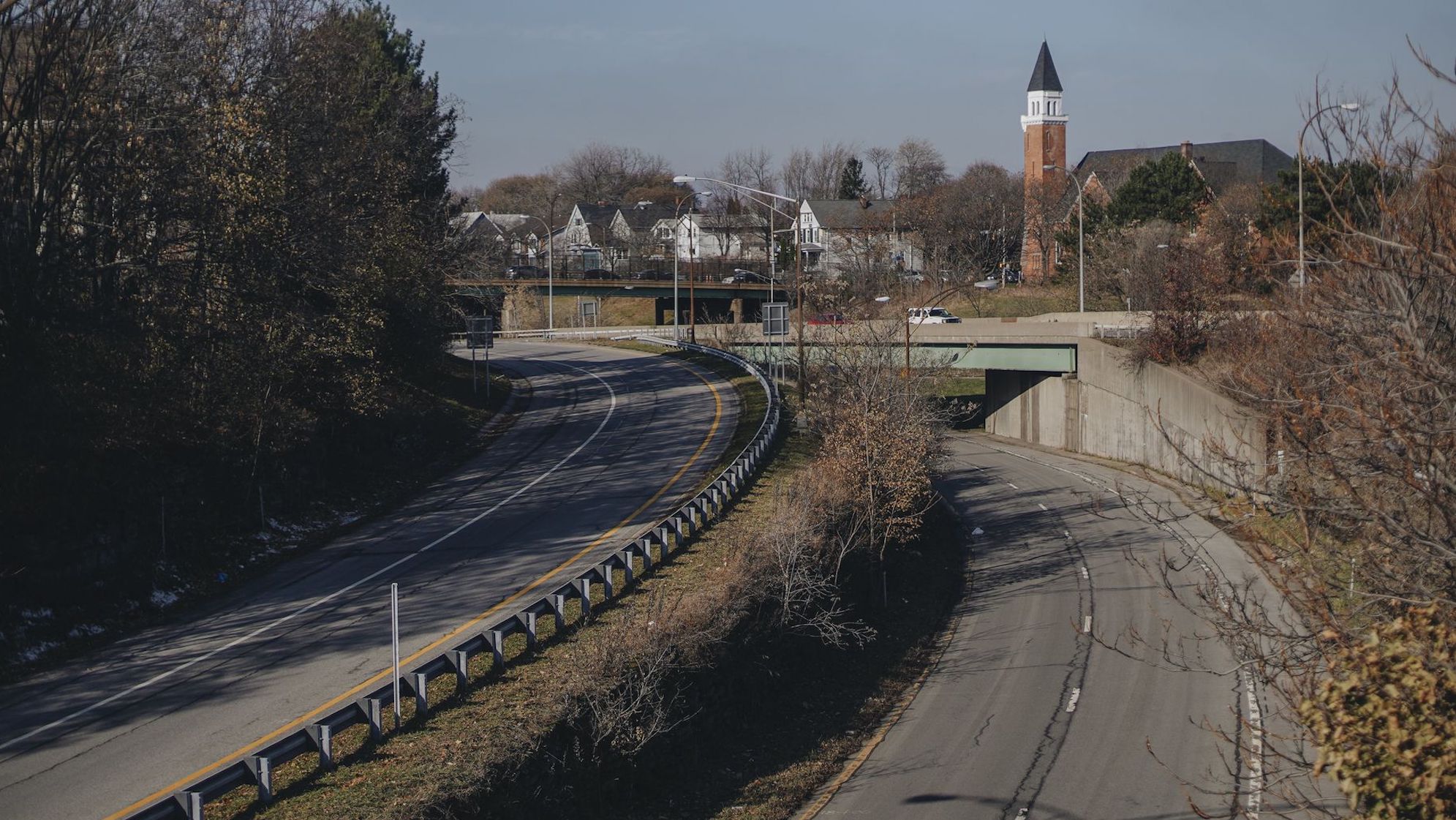
Not long ago, the land where all this construction is taking place was the Inner Loop, a six-lane sunken highway surrounding downtown. In 2014, the city embarked on a plan to bury part of the highway under a mountain of dirt and build a new neighborhood on top of it.
The result: $229 million in new investment, including 519 homes and 45,000 square feet of commercial space. Removing that section of highway has been so successful, officials say, they are now considering burying more of it.
In Rochester and several other American cities, some of the biggest highway infrastructure projects under consideration involve demolition rather than construction. Removals are being considered for stretches of highway in Detroit, Tampa, Fla., Baltimore and elsewhere. They are following in the footsteps of cities such as Portland, Ore., Milwaukee and Chattanooga, Tenn., all of which have removed highways.
The highways mostly date from the 1950s and 1960s, a time when urban planners envisioned a network of high-speed roads whisking people from suburban homes to downtown jobs. Many are part of the Interstate highway system, which was under construction in those years and today connects cities across the U.S. with nearly 47,000 miles of road.
In the process, highway builders swept aside established urban neighborhoods, many of which were predominantly African-American. Businesses soon followed their customers to the suburbs, leaving buildings abandoned.
The Strong Museum of Play, which showcases toy history, is expanding on the former highway area in Rochester, N.Y.
Libby March for The Wall Street Journal
The roads “cut out a huge part of the fabric of the city and they also encouraged the use of cars so they led to even more blight by requiring more space for parking,” said Norman Garrick, an engineering professor at the University of Connecticut.
Today, the trend is reversing. Revitalized city centers are drawing new residents and businesses. Some cities now see the highways as ugly concrete monoliths that divide neighborhoods and hinder efforts to create pedestrian-friendly spaces. The roads are also getting old. Maintaining them would cost more than officials are willing to spend.
New York state has been particularly active in removing outdated highways. Highway removals are under way in Niagara Falls and the Bronx, and future projects are being discussed in Syracuse and Buffalo.
In Rochester, a thriving downtown grew desolate following the completion of the Inner Loop in the 1960s, on land that had once held almost 1,300 homes, recalled Lovely Warren, the city’s mayor. “If you wanted to come down here it was to go to court or to transfer on the bus,” she said.
VIDA Rochester, a new luxury apartment complex, is being built on land that was once highway.
Libby March for The Wall Street Journal
In many cities the racial makeup of the neighborhoods determined where the highways would go.
“The freeways were put in to divide the black neighborhoods from the white neighborhoods or they were put straight through the center of the black neighborhoods and basically destroyed them,” Mr. Garrick said.
Knitting the neighborhoods back together poses its own challenges. In Rochester, the remaining section of the Inner Loop separates an affluent area of new townhouses from a lower-income neighborhood dotted with vacant lots.
For decades, the highway has served as a moat, keeping the two sides apart. Talk of removing it has sparked gentrification concerns.
“It’s not an evil thing, gentrification, but unless you’re prepared it can have a detrimental effect on the neighborhood,” said Tony Clyde Wilson, steward board president of the New Bethel Christian Methodist Episcopal Church, which sits right next to the Inner Loop.
A group of residents on both sides of the highway has been trying to bridge the gap.
“You’re creating a new neighborhood that hasn’t existed in over 50 years,” said Shawn Dunwoody, an organizer. “We want people invested in shaping that area and making it happen.”
Organizer Shawn Dunwoody says of the Rochester rebuilding plans: ‘You’re creating a new neighborhood that hasn’t existed in over 50 years.’
Libby March for The Wall Street Journal
Highway teardowns could soon get some help from the federal government. In July, the Senate Environment and Public Works Committee adopted a $287 billion transportation bill that creates a $120 million program to help fund highway removals.
Sen. Chris Van Hollen (D., Md.), who helped create the program, said he was motivated by Baltimore’s so-called Highway To Nowhere, a one-mile six-lane stretch originally intended to connect to Interstate 70 before it was abandoned.
“It’s like a big gash through West Baltimore,” Mr. Van Hollen said.
Officials considering ripping out downtown highways have had to convince residents that they won’t be stuck in endless traffic jams. Studies, including one by Mr. Garrick, have found that removing major roads didn’t noticeably worsen congestion because traffic spread across the existing street grid.
For cities, removing highways brings with it a significant prize: The ability to reclaim acres of developable land. Milwaukee gained almost 30 acres of prime downtown real estate after it demolished the Park East Freeway in 2002 and 2003. Since then, the area has seen about $1 billion in private investment, the city estimates.
“We’ve showed that when you take the highway out of the city it gets better. It’s that simple,” said Peter Park, who served as Milwaukee’s planning director at the time.
That experience has emboldened other big cities.
In Detroit, officials are considering removing Interstate 375, which paved over established black neighborhoods in the city’s core.
In Tampa, planners are studying removing a stretch of Interstate 275 that cut through the historic Tampa Heights neighborhood.
Beth Alden, president of the Hillsborough County planning organization, said officials were responding to requests from residents.
“They’ve asked do we have to have a Great Wall of Tampa? What if there were something better there?” she said.
A thriving downtown in Rochester grew desolate following the completion of the Inner Loop in the 1960s.
Ho, ho, holy tacky Christmas! While there’s always room for a little kitsch this time of year, sometimes Christmas decor can cross the line into truly tacky territory.
Of course, the line between tacky and tasteful can be an awfully thin one, blurred by personal opinion, so we’re not judging (much). From their ugly sweaters to their crazy light displays, some people relish in taking tackiness to new seasonal heights, and that’s OK.
If you’re in that camp and are looking to add to your collection, we’ve rounded up some of the tackiest Christmas products ever for your consideration. The rest of you can just enjoy gawking in amazement that such things even exist.
1. Santa toilet-seat cover set
Sorry, Santa!
$13.99, Amazon
Toilet-seat covers in general make us cringe, but Santa’s face on this one ($13.99, amazon.com) takes it one unfortunate step further.
2. Christmas toilet paper
Oh crap! It’s Christmas toilet paper.
$4.45, Etsy
He sees you while you’re—um, just in case a Santa toilet-seat cover isn’t enough for you, you can wipe with holiday-themed toilet paper, too ($4.45, etsy.com).
3. Farting Santa ornament
Doesn’t Santa deserve some dignity?
$7.29, Amazon
And the sophisticated Christmas humor continues with this farting Santa ornament ($14.94, amazon.com).
4. Christmas car reindeer costume
Do car-stumes really have to be a thing?
$9.99, Walmart
Cars need gas, oil, and a new carburetor once in a while. What they don’t need: costumes ($9.99, walmart.com)!
5. Pooping reindeer
This reindeer poops at the push of a button. Hooray?
$19.99, Bed Bath & Beyond
Just when you think there can’t possibly be any more potty-themed Christmas items, along comes a pooping reindeer ($19.99, bedbathandbeyond.com).
6. Animated Santa kicker
Poor Santa.
$23.99, Bed Bath & Beyond
Talk about adding a kick to your Christmas tree. This pair of Santa’s legs ($29.99, bedbathandbeyond.com) kicks up and down, for an unsettling effect.
7. Toothy ornament
While visions of terrifying teeth danced in their heads…
$24.95, Etsy
The only saving grace here is that the Etsy seller states that “No real teeth were used in the making of the ornament” ($24.95, etsy.com).
8. Naughty talking gingerbread ornament
Run, run as fast as you can from this one!
$11.95, Amazon
You’re definitely going on the naughty list if you put this gingerbread man ($16.94, amazon.com) on your tree. It talks too, uttering four phrases we can’t repeat here.
9. Poop ornaments
Because why?
$8.99, Walmart
The fact that these “tree turd danglers” ($8.99, walmart.com) come in a set of four makes them even worse… isn’t just one enough?
10. ‘Christmas Story’ leg lamp
Let your tackiness shine bright!
$59.99, Walmart
Last but not least, if you want to go the traditional route with your tackiness, you can’t go wrong with this leg lamp ($59.99, walmart.com) inspired by the holiday classic “A Christmas Story.”
Much like “jumbo shrimp,” “civil war,” or “working vacation,” the phrase “affordable mansion” seems the most moronic of oxymorons. But we’re here to tell you: It’s a real thing! Contrary to popular belief, buying a great big house of your own does not require a winning Mega Millions ticket or fat trust fund. You just need to look in the right places.
That’s why the trusty data team at realtor.com® sussed out the cities where buyers can score an affordable, large home clocking in at 5,000 square feet and above. Just don’t hold your breath waiting to snag a massive place in Seattle’s Laurelhurst neighborhood, or Manhattan’s Upper East Side. No, you’ll need to set your sights a bit farther off the (glam) beaten path.
“A mansion in Alabama is going to be very different from a mansion in Beverly Hills,” says Michael Corbett, author and TV host of Extra’s “Mansions and Millionaires.” “The difference is how they’re defined. In smaller cities, [a mansion is] big room count and square footage. In Los Angeles, San Francisco, and Manhattan, it’s amenities: the indoor spa, the wine cellar, and all that stuff.”
As long as buyers stay away from the costly coasts, there are plenty of reasonably priced, extra-large houses available in the Midwest and South—where land and construction costs are cheaper and housing demand less frantic. There are also one-time industrial powerhouse cities that have plenty of historic mansions, once owned by local titans of industrial, for sale.
To find out where buyers can get the most mansion for their moolah, we searched for the cities with the most affordable homes* of 5,000 square feet or larger on realtor.com. They had to have at least 100 mansion listings to be included in our ranking,** and we limited our list to just one city per state to achieve geographic diversity.
So have you found yourself daydreaming about that ultimate luxury in real estate: space? Let’s go find your giant dream home.
Dayton was booming in the mid-19th century, as one of the largest and wealthiest cities in Ohio. It was a center for industries ranging from publishing to airplanes. And the local titans of industry built grand homes on the north side of the city to match their success.
“That old money built the mansions in North Dayton,” says local real estate agent Kunal N. Patel, of Coldwell Banker Heritage Realtors. Today, buyers “can get a lot of bang for their buck in Dayton.”
North Dayton, which is near the city’s newly thriving downtown, offers some serious deals for those who want old-world character for a steal. Buyers can find sprawling mansions like the landmark Hook estate, a 9,000-square-foot ornate Tudor with seven bedrooms on 3 acres of English gardens for just $399,900.
That’s not a typo.
Folks looking for a palace of their own aren’t limited to North Dayton. From the opulent 1980s up until the auto industry started to leave town in the early 2000s, executives were erecting McMansions in South Dayton and the close-in suburb of Kettering, OH. As a result, buyers can pick up a five-bedroom modern Tudor or a traditional-style, seven-bedroom home in the mid-$400,000 to $600,000.
And these deals are attracting locals as well as folks working in Cincinnati, who don’t mind a roughly 55-mile commute each way.
“Why buy 5,000 square feet in [Cincinnati] that’ll cost you $1 million, when you can get the same place for $600,000?” asks Patel.
Those looking for a mansion in Indianapolis should head to the Old Northside of the city’s revitalized downtown. The neighborhood is full of stately Victorians and Tudors with gorgeous slate roofs on half-acre plots built by transportation industry bigwigs, natural gas money, and pharmaceutical pioneers such as Eli Lilly in the late 19th and early 20th centuries.
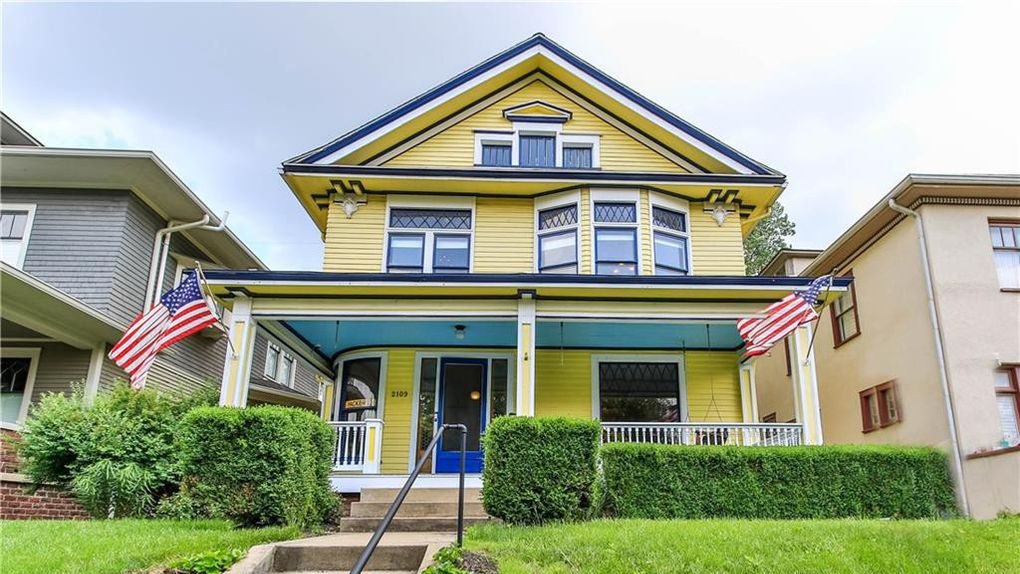
But be warned: It can be tough to find mansions in the desirable, historic area for close to the median price of $679,000. To get five bedrooms in this walkable neighborhood, many folks are willing to fork over $1 million—or more. This stately five-bedroom, 3.5-bath home clocks in at just over 9,000 square feet for $975,000.
Nearby in the thriving Herron-Morton Place neighborhood, buyers can pick up a 5,000-square-foot, four-bedroom Queen Anne with a finished attic for just $529,900. Corporate executives from companies such as Pfizer and Dow Chemicals snap these sprawling homes up when they move to town.
“If they’re coming from somewhere in the Northeast, you’re not getting anything like that square footage for the price,” says local real estate broker Melanie Scheetz, of Century 21.
Savvy buyers can earn some serious bragging rights by finding a home on Millionaires Row. The street is located in historic Old Louisville, home to the movers and shakers of the Victorian era.
Due to the city’s strategic location at the falls of the Ohio River, the city started to boom in the early 1800s with the advent of the steamboat. It became a major commercial center and the largest city in Kentucky, prospering for a century.
The area saw a decline in the early to mid-20th century, which means some of the sprawling, century-old mansions are in need of some costly repairs. But Old Louisville is on its way back up, newly popular with local college students and young professionals.
Today buyers can pick up homes right on Millionaires Row for a steal, including this five-bedroom, Italianate-style Victorian for $709,000. It comes with a three-story, curving staircase, a two-story carriage house, and a pond on the property. Meanwhile, those willing to trade (quite a bit of) elbow grease for a deal, may want to consider this seven-bedroom, neoclassical Colonial for just $325,000.
Like many of the other cities on the list, Allentown’s economy was thriving in the early 20th century. Everything from steel and silk to cigars and parlor furniture was produced in the Rust Belt metropolis. And those who owned these businesses constructed sprawling Victorian and Craftsman homes in the West End near the 1908 public park.
But the past few decades haven’t been kind to Allentown. Multiple plants were shuttered; Bethlehem Steel, at one time the country’s second-largest steel producer, closed in 1995. As folks left the city to find work elsewhere, home buyers disappeared and prices dropped. That’s left plenty of once-grand mansions sorely in need of repair on the market in the $400,000 to $500,000 range.
Better maintained mansions in the historic area, the West End, cost a bit more, including this six-bedroom mansion for $720,000. The impressive home boasts a marble foyer, a charming solarium, and a courtyard out back.
That may sound like a lot for a city that’s just starting to come back, thanks to a slew of new jobs from companies like Amazon and Walmart. But it’s a steal compared with prices in Philadelphia and New York City, which are both less than two hours away.
Connecticut’s state capital has seen its share of struggles in recent years, losing some long-term employers and struggling to attract new startups and a younger workforce. The city’s population has declined 1.7% since 2010.
But in another era, the wealthy magnates of Hartford’s insurance businesses and firearms maker Colt built palatial New England–style homes a short horse ride from what was a thriving downtown. Full of ornate details like milled gumwood paneling, intricate crown moldings, and Italian marble fireplaces, these lovely places cost a mint in their heyday.
Now, buyers who can afford the steep property tax rates (the state has among the highest in the country) can enjoy the splendor of these old estates. More than a century old, this seven-bedroom Colonial offers crystal chandeliers, heated marble floors, and an outdoor kitchen and entertainment center for just $549,900. It’s located in the city’s tony West End.
Meanwhile, this eight-bedroom Tudor Revival, listed on the National Register of Historic Places and sitting near the governor’s residence, is on the market for just shy of $450,000.
“We’re starting to get back some people from high-wealth areas like California that are moving back,” says Amy Chorew, vice president of Learning Better Homes & Gardens Realty. “We’re seeing these houses come to life again.”
Those looking for a spacious home don’t have to limit themselves to just one small swath of this city. Large homes and mansions are just about everywhere, says local real estate broker Cynthia Carnahan, of ReeceNichols Real Estate.
Newer, oversize homes are available in neighborhoods such as Wilson Estates. Older residences built over the past few decades are in Country Place Estates, Foliage, and Vickridge. And some of the grand, century-old abodes in College Hill are listed on the National Register of Historic Places.
Buyers can score this 7,000-square-foot, seven-bedroom brick house on three-quarters of an acre in the gated Foliage community for $775,000. It features a rec room with a fireplace and wet bar, a game room, and covered deck and patio.
Folks who don’t mind a little bit of a commute can head 25 minutes east to Flint Hills National, a community centered around the national golf club of the same name, in Andover, KS.
“You can find lots of houses at 5,000 square foot for less than $1 million,” says Carnahan. “We’re one of the best deals for real estate in the country.”
Tulsa’s most expensive homes are often located in the southern portion of the city, where newly built, 20,000-square-foot megamansions can go for $6 million or more. But those looking for a bargain may want to hit the city’s historic Midtown, Philbrook (near the Philbrook Museum of Art), and Utica Square neighborhoods instead.
Midtown is filled with Colonial, traditional, and art deco homes built in the 1920s and 1930s for the city’s richest oil families. Tulsa was known as the “Oil Capital of the World” for much of the 20th century, after all.
“A lot of the most celebrated art deco architects came to Tulsa and built houses here,” says local real estate agent John Sawyer, of Chinowth & Cohen.
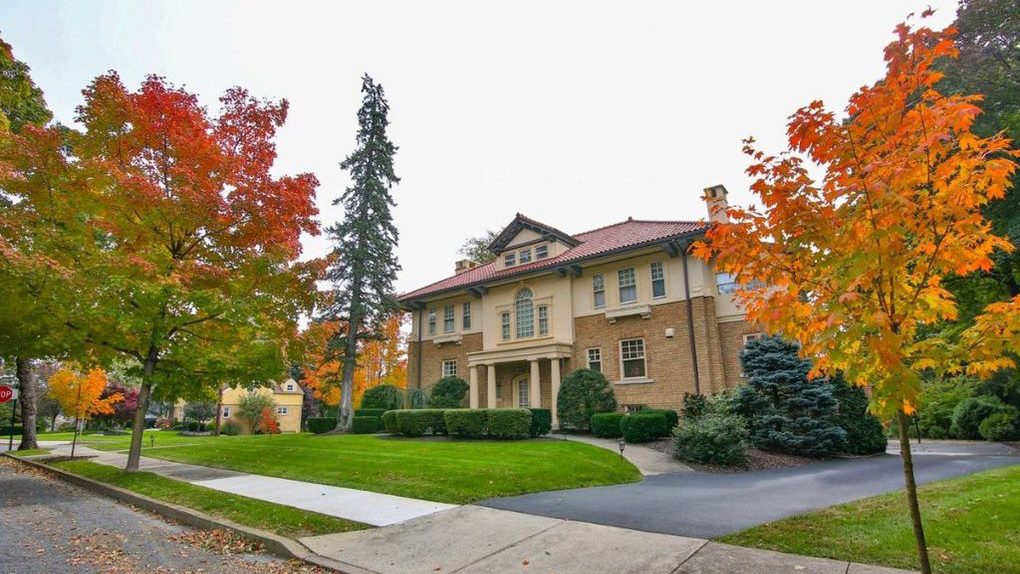
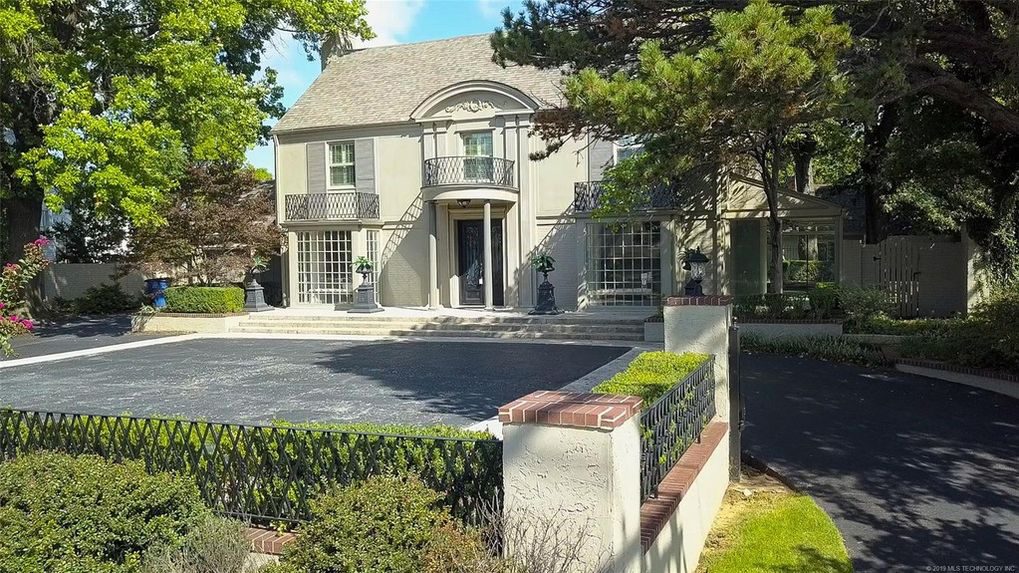
Larger homes start around $750,000 and go up into the multimillions. This renovated estate with an in-ground pool and pool house is listed for $799,000.
Other popular areas for those with means are walkable Philbrook and Utica Square. Homes of all sizes in these areas start at $400,000 and can go up past $7.5 million, Sawyer says.
“You can sometimes snag a house in these neighborhoods for $500,000 next to $3.5 million mansions,” he says.
Like Nashville, about two hours northwest, Chattanooga has been experiencing a growth spurt. Unemployment is low, incomes are up, and home prices are steadily rising as well thanks to the expansions of companies like Volkswagen and Amazon in the area. But that doesn’t mean there aren’t still bargains to be found on large homes.
Many of the higher-end homes are located in Northshore, North Chattanooga, and Dallas Heights with some of the fanciest of the bunch offering views of the Tennessee River. But buyers looking for truly affordable estates may want to try Browns Ferry Landing, where they can find a five-bedroom, English Tudor with river frontage for $895,000, just 12 minutes from the city center.
The artsy suburb of Signal Mountain is another good bet for those who don’t mind leaving the city limits. The town has lots of hiking trails, open-air theater productions, and bluegrass concerts—as well as large homes. This six-bedroom, 4.5-bath home perched on a mountain offering views from a covered porch is on the market for $845,500.
Unlike many of the other cities on this list, Atlanta is far from a struggling city on the upswing. The “New York of the South” is booming, with more homes being built on its outskirts. That means mansion shoppers on a budget may need to forgo a big house in the tony Buckhead neighborhood and look on the edges of this 134-square-mile city.
To get inside the Interstate Highway 285 loop, buyers can find large, traditional homes under $900,000 in suburban-feeling areas like Underwood Hills and Hanover West. Space seekers may like this five-bedroom, 4.5-bathroom traditional home on a private cul-de-sac with trails leading to the local tennis club for $799,000.
There’s more to choose from on the northern and southern ends of the city, in neighborhoods such as Sandy Springs and Dunwoody to the north and Beacon Hills to the south. This seven-bedroom, 6,000-square-foot residence in Dunwoody is listed for $625,000.
In the late 1980s, Chip Murphy of Murphy Oil Soap fame took 7,000 acres of farm and timber land surrounding Shinall Mountain to develop a country club subdivision called Chenal. It now boasts some of the more luxurious homes (which can be found for a steal) in Little Rock as well as two championship golf courses, pools, and a retail promenade.
Buyers can find deals on palatial homes in the area. And there’s no shortage of reasonably priced land available here for those who’d like to be involved in the design of their dream homes.
That’s why this elegantly landscaped five-bedroom home with a small waterfall is on the market for $625,000. Those who really want a lot of space may prefer this 6,200-square-foot house, which comes with a game room and three-car garage and is spacious enough for two kitchen islands.
“Mansions built five, 10, 20 years ago are selling for next to nothing, because there’s so much land in Little Rock,” says iRealty Arkansas real estate broker ChaseRackley. “We have so many million-dollar homes selling for $800,000 to $1.3 million that 10 years ago were easily worth $1.5 million to $2.5 million.”