Monday, October 26, 2020

A Place to Die For: Why People Buy Homes Where Brutal Murders Occurred

Why People Buy Homes Where Brutal Murders Occurred

Google Maps; LA Times

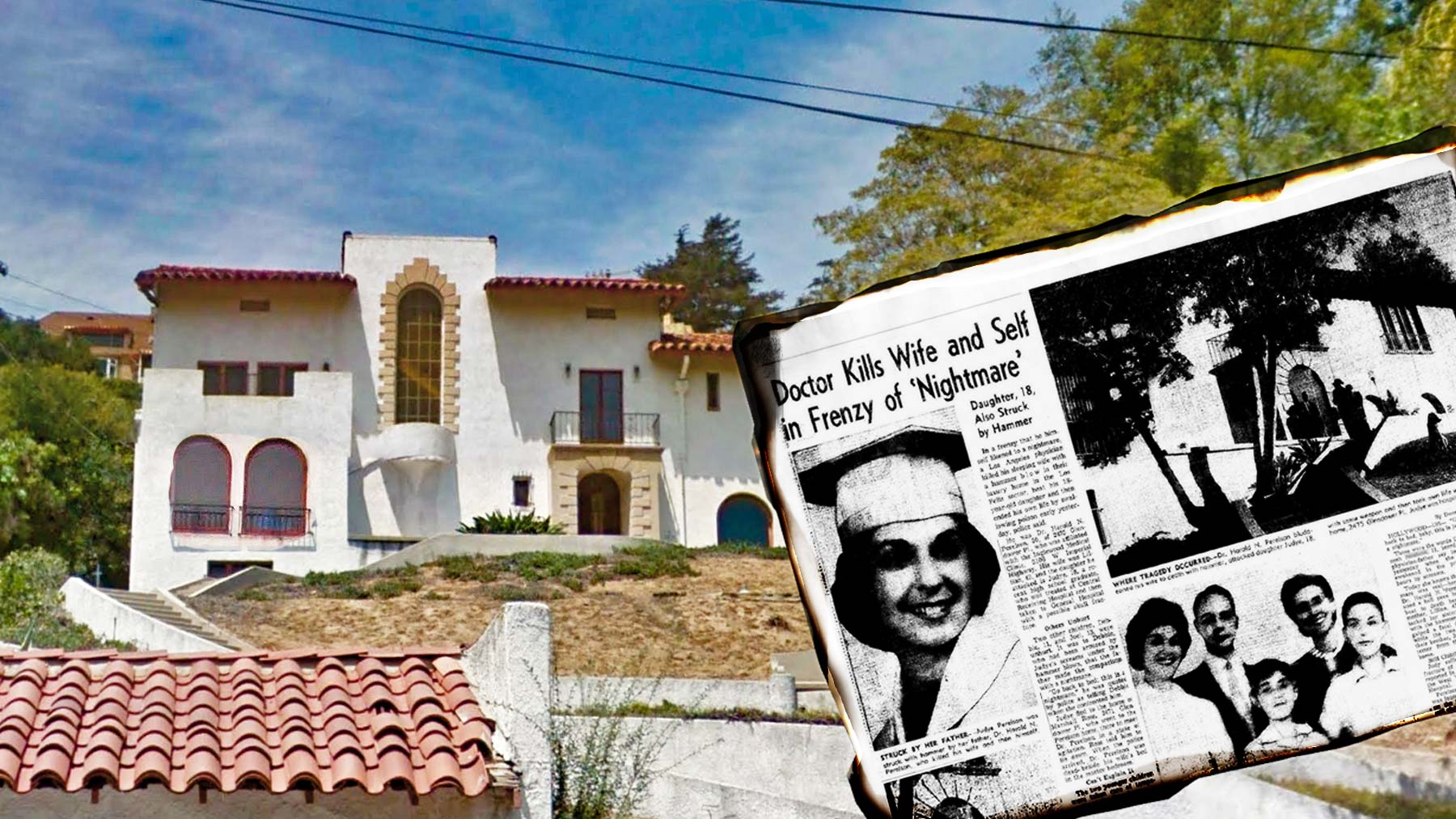
Tech investor Braden Pollock closed on a four-bedroom, Spanish Revival-style mansion sitting atop a hill with an unobstructed view of downtown Los Angeles in 2016. The house, built in 1925, comes with a library and a ballroom and sits on nearly two-thirds of an acre in the hilly neighborhood of Los Feliz. Pollock got the place for a steal at a probate auction back in June.

There was a reason for the bargain. The home comes with something else, too: a history. An unfortunate one.

Known in popular imagination as “The Los Feliz Mansion,” the house was the site of one of the most haunting and highly publicized murders in L.A. history. Early one morning in 1959, cardiologist Harold Perelson beat his wife, Lillian Perelson, to death with a ball-peen hammer, and then tried—and failed—to slay his 18-year-old daughter by bashing in her head with the same weapon.

She screamed “Don’t kill me!” so loudly that she woke up her neighbors as well as her younger brother and sister. The doctor told the children to go back to bed because they were having a nightmare. (True.)  He then swallowed a lethal cocktail and was found dead in his bedroom beside the body of his wife. No one ever determined what brought on the murderous rampage.

Some believe the place has been haunted ever since. In the decades following the tragedy, the house sat mostly empty.

Inside the notorious Los Feliz home, post-cleanup, pre-renovation.
Inside the notorious Los Feliz home, post-cleanup, pre-renovation

realtor.com

“It doesn’t affect me,” Pollock said of the home’s grisly history, shortly after purchasing it. “It was a great opportunity to get a rare property like this at a good price.”

Pollock and his wife, television legal analyst Lisa Bloom applied for renovation permits and stripped the home down to the studs. They had planned to move into the master bedroom where Lillian was killed. However, they never completed the renovations.

The home went back on the market late last year with a $3.5 million price tag. That list price was dropped to $2.5 million in March. It’s now under contract.

Opportunity or nightmare?  Would you buy a home that was the site of an infamous atrocity?

More to the point: why would anyone?

Lisa Bloom and Braden Pollock
Braden Pollock and Lisa Bloom had grand plans to renovate the Los Feliz mansion.

Michael Kovac/FilmMagic

As it turns out, buyers like Pollock, unfazed by dreadful crimes, are a rare breed. Many house hunters get the heebie-jeebies even setting foot in a home where someone died of natural causes—let alone one where someone was bludgeoned to death. It’s just too much bad juju.

And yet, eventually, even the most famous murder houses—even including the homes where Nicole Brown Simpson and JonBenét Ramsey diedwill usually get snapped up by all sorts of buyers. If they don’t get razed to the ground, that is.

Let us count the (grisly) reasons: Penny-pinchers are lured by the steep discounts. Entrepreneurs see business opportunities. Some house hunters hope that they can transform the gory karma of these abodes. Others are true crime and haunted house junkies. And some buyers are simply not perturbed by what happened, no matter how horrific.

Here’s the killer truth: Buying a murder house might actually be a sound financial investment. If you can handle it.

Trying to save a few bucks? Buy a murder home!

Even the bloodiest murder homes may appeal to buyers on a budget—the macabre residences are typically discounted by about 10% to 15%, says real estate appraiser Orell Anderson, who valued the Simpson and Ramsey residences.

If the crime involved a celebrity, or was so horrendous that it made national news night after night, that price cut could be even more—between 15% and 50%.

“Most people are creeped out and need to have an incentive to buy,” says Anderson, president of Strategic Property Analytics in Laguna Beach, CA.

Marshall Herff Applewhite
Heaven’s Gate leader Marshall Herff Applewhite.
Always check out the previous owner of the house you’re buying.

Brooks Kraft LLC/Sygma via Getty Images

For example, the seven-bedroom mansion where 39 Nike-shod members of the Heaven’s Gate cult killed themselves in 1997 in order to reach what they believed was an alien spacecraft, was sold for $668,000 in 1999. That’s less than half of the $1.6 million that the San Diego mansion was listed for before the mass suicide.

“It was a significant tragedy,” says Anderson, who was one of the appraisers. Another reason for the price cut was the stench of the decomposing bodies, discovered days after their deaths, that “just permeated the walls of the structure.”

Heaven's Gate house exterior
Previous residents of the Heaven’s Gate home being removed.

Axel Koester/Sygma/Sygma via Getty Images

Can a home’s dark legacy be undone?

Some owners hope that by moving their families into a murder home, they can change its evil karma.

Pollock, for instance, believed that he and his family could offer the mansion a new narrative. “I don’t want to live in a murder mansion. I want it to be my home,” he said after the purchase. “I want it to be associated with love and happiness.”

Carol Schuller Milner bought JonBenét Ramsey’s Boulder, CO, home in 2004 for $1.05 million for similar reasons. The house where the 6-year-old beauty queen was found dead in 1996 had become a “dark monument” to “something horrible that happened,” she told Inside Edition. So she wanted to undo that legacy.

“It’s full of joy again. It’s full of life again,” she said.

JonBenet Ramsey house
Former residence of JonBenét Ramsey

Doug Pensinger/Getty Images

Leaving the past in the past

Other buyers simply aren’t overly concerned with the appalling history of their dwellings.

Socialite Katharine Thompson Wood was beaten to death in her bed in 1967 in the Centerville, DE, house now owned by former Delaware Republican Chairman Terry Strine.

“It’s irrelevant,” says Strine of the horror that occurred in the five-bedroom house all those years ago. “After all, how many houses that are 50 years or older have not had someone pass away in them?”

Strine, who lives there with his wife and three children, added that it’s a “great home” in a “great area.” “The only history that counts is mine,” he says.

Murder home premium? Only in New Orleans

In a handful of ghost-loving cities, a good horror story may actually boost the price of a home.

Just look at the five luxury apartments in the “Sultan’s Mansion” in the French Quarter of New Orleans. One of the furnished, two-bedroom units in the purportedly haunted building is going for $2,500 a month, as compared to the city’s median price of $1,650.

Legend has it that the brother of a Turkish sultan rented out the property, also known as the Gardette-LePretre Mansion, in the mid-19th century. One morning, a neighbor saw blood oozing out of the front door. When police arrived, they reportedly discovered the mutilated body parts of the Turk’s harem, guests, and guards scattered throughout the house. The sultan’s brother was allegedly found buried alive in the courtyard.

Lalaurie House
LaLaurie Mansion

Steven Wagner/Getty Images

“Sometimes in New Orleans a house will bring a higher price because it’s documented as being haunted,” says local Realtor Bryan Drude, of Keller Williams Realty, who rents out units in the building.

Another prime example is the LaLaurie Mansion, which had a starring role in the witch-centric “Coven” season of “American Horror Story.” It was owned by Delphine LaLaurie, a socialite with an evil appetite. The depths of her depravity were revealed when a fire swept through the mansion in 1834. Firefighters allegedly discovered more than a dozen slaves chained and caged in the attic who had been viciously tortured.

The atrocities didn’t scare away one previous owner, Jay Monroe, CEO of satellite service provider Globalstar. He lived there for about half a dozen years with his wife and two children.

“It’s just a magnificent French Quarter mansion,” says Monroe, who says he never experienced any paranormal activity there.

What he did find disturbing about the mansion were the ghost tours it attracted.

“There would be a hundred people a night, looking up and telling absurd stories,” he says. “It was annoying with a capital ‘A.'”

In 2006, he sold the mansion to actor Nicolas Cage for top dollar—a cool $3.45 million. After Cage fell on hard times, it was foreclosed on in 2009. The mansion was sold to an energy investor for $2.1 million in 2010, according to realtor.com® records.

Cashing in on a murder mystery

And sometimes, a famously unsolved homicide can present a sweet business opportunity for a home’s new owners. Case in point: the Lizzie Borden house.

On Aug. 4, 1892, the mutilated bodies of her father and stepmother, Andrew and Abby Borden, were found in their Fall River, MA, home. Lizzie Borden was arrested for their murders, but acquitted a year later. The murderer’s identity remains a mystery.

Lizzie Borden house
Lizzie Borden house

Wikipedia CC

Lee-ann Wilber, a former truck driver and retail store manager, capitalized on the unsolved crime when she bought the Lizzie Borden Bed & Breakfast Museum with a business partner in 2004. Tours of the home are now offered seven days a week, and guests can stay overnight in one of the B&B’s eight bedrooms. Axes not included.

One of the B&B’s main selling points is the belief among some guests that the joint is haunted. (Cue terrifying music.)

Acquitted suspected axe murderer Lizzie Borden; Bodies of her stepmother and father; sign for the Lizzie Bordern B&B, which gets 4.5 stars on Yelp.
Suspected axe murderer Lizzie Borden; bodies of her stepmother and father, Abby and Andrew Borden; sign for the Lizzie Borden B&B (4.5 stars on Yelp).

Wikipedia CC; Dennis K. Johnson/Getty Images

Wilber claims she was doing laundry in the basement soon after she bought the house, when “I felt like I walked into a walk-in freezer. It felt like someone ran their finger down me.”

She’s experienced other unexplained things as well, like bedroom furniture moving in the middle of the night or doors opening and closing on their own.

Martha McGinn, former owner of the Lizze Borden house, who converted the house into a B&B.
Martha McGinn, the former owner of the Lizzie Borden house, converted it into a bed and breakfast.

Barry Chin/The Boston Globe via Getty Images

But just because someone died in a house doesn’t mean it’s haunted, says Robb Phillips, founder of Paranormal Technology Investigations, a group of real-life ghostbusters based in Jonesborough, TN. The group, which accepts donations in lieu of fees, performs blessings and exorcisms.

If buyers aren’t looking for a ghost as an amenity in their new home, he recommends they ask their real estate agents about the home’s history … and whether it was built on a burial site.

Sellers in three states are required to inform house hunters if someone has died on the premises. In South Dakota and Alaska, only murder and suicides that happened in the last year need to be revealed; in In California, all deaths in the last three years must be disclosed.

“If someone just died a natural death in it from natural causes, I think it would be OK to go ahead and live in the home,” Phillips says. But if there was a murder, “there could be something evil there.”

Why no one wants to buy Jeffrey Dahmer’s childhood home

Some murder homes, however, have a hell of a time finding a buyer. Musician Chris Butler, of the new wave band the Waitresses, has been trying to sell the Akron, OH, childhood home of serial killer/cannibal Jeffrey Dahmer for the last few years. This is the three-bedroom house home where Dahmer killed and dismembered his first victim, Steven Hicks.

Jeffrey Dahmer enters the courtroom in August 1991.

EUGENE GARCIA/AFP/Getty Images

Butler, who declined to speak with realtor.com, told NPR that he bought it in 2005 because he wanted to live somewhere “where I could make a loud musical racket and not bug my neighbors.”

But Dahmer isn’t the only thing scaring away buyers, says Realtor Richard Lubinski, who once listed the property. The high price and its lack of curb appeal played a part as well, he says.

The house, which is not currently for sale, was most recently advertised at $295,000, more than double the $132,400 median list price in the Akron metro area as of Sept. 1, according to realtor.com. It was also offered for rent during the Republican National Convention in July.

Exterior of Jeffrey Dahmer's home in Ohio.
Exterior of Jeffrey Dahmer’s former home in Akron, OH

realtor.com

Secrets of selling horror houses

Some agents roll out special tricks when their homicide homes aren’t leaping off the market. Addresses can be altered to make it harder for lookie-loos to find. And the exterior can be modified so that it doesn’t look like the crime-scene photos anymore.

One famous example: The street number and trajectory of the walkway of Nicole Brown Simpson’s four-bedroom condo were changed. Despite this, the property still initially sold for a 15% discount, Anderson says. It went for $595,000 in 1997 and then for $1.7 million in 2006.

nicole brown simpson condo
Nicole Brown Simpson’s condo

AP Photo/Eric Draper

“If there’s a suicide or a murder [in a home], it’s a big deal,” says Beverly Hills-based luxury Realtor Scott Tamkin, who sold the home where Simpson and Ron Goldman were killed in 1994. “People feel uncomfortable that there may be a ghost in the house.” Some people, anyway.

The post A Place to Die For: Why People Buy Homes Where Brutal Murders Occurred appeared first on Real Estate News & Insights | realtor.com®.


via A Place to Die For: Why People Buy Homes Where Brutal Murders Occurred

September New Home Sales: How Long Can the Good Times Roll?

  • September new home sales fell 3.5% from August but were up 32.1% from a year ago, to 959,000 (SAAR), according to the U.S. Census Bureau.
  • The median sales price of new houses sold in September 2020 was $326,800, up 1.4% from August and 3.5% from September 2019.
  • There were 3.6 months’ of supply of new homes available for sale in September.

September new home sales fell somewhat short of expectations and represent a small decline from prior months — but at just shy of 1 million sales for the month (at a seasonally adjusted annual rate), its clear the new home market overall remains very strong even given this recent moderation. Year-to-date, new home sales are up 16.8% from the same nine-month period in 2019. A favorable mortgage interest rate environment, an enduring desire for brand-new homes and a longstanding shortage of existing homes available for sale continue to pay dividends for home builders. And builders are clearly taking notice – their expectations for sales volume over the next six months are the highest they’ve ever been. The question now is whether these goods times can continue and for how long. A lasting inventory drought matters less for new home sales than for the re-sale market – roughly two-thirds (67.6%) of new homes purchased in September weren’t even been built yet. But broader economic and social factors including persistently high unemployment and the spread of the coronavirus represent considerable potential constraints for new home sales. For now, though, these issues don’t seem to be much of a threat to what continues to be a very solid run for new home sales.

The post September New Home Sales: How Long Can the Good Times Roll? appeared first on Zillow Research.


via September New Home Sales: How Long Can the Good Times Roll?

How Red State/Blue State Differences in Housing Might Tip the Election

Aerial homes

JamesBrey/Getty Images/realtor.com

We’ve listened to the pundits, suffered through the debates, scrutinized the polls, and squinted at that ever-changing electoral map. Everyone, it seems, is desperately trying to get a true read on what’s going to happen, in one of the most bitterly contentious presidential elections our nation has ever seen.

There is no shortage of critical issues hanging in the balance: the pandemic, the economy, national health insurance, climate change, race relations, oh my! It seems at times that the United States has never been more sharply divided.

But where do the deeply etched red-state/blue-state splits really come from? And how much can the huge housing differences across the nation tell us about how we got here—and where we’re going? We turned to the data to find out.

We analyzed eight major housing indicators, to see how greatly they diverged between red, blue, and swing states.

To come up with our findings, realtor.com® analyzed internal data to come up with metrics for home and rental price, price appreciation, home size, and inventory. We took the age of homes and the homeownership rate from U.S. Census Bureau data. The second-home information came from Optimal Blue, a real estate data firm specializing in lending information.

We can’t pinpoint the exact cause of the rancor that’s developed between many Republicans and Democrats. But we can look at the substantial housing differences that may be contributing to the divide. They include everything from blue-state denizens paying a whole lot more for their homes and rentals, to those in red states having larger homes to live in.

“Life can be really different, depending on where you live,” says realtor.com’s chief economist, Danielle Hale. “That’s reflected in different real estate norms, and it has a role in how you view your life and your priorities and values.”

She adds, “Owning a home literally gives people a stake in the ground, and that seems to translate into [more of] an incentive to vote.”

The analysis identified 20 red states, 17 blue states plus Washington, DC, and 13 swing states. We used Politico’s designations to break out swing states. They included Arizona, Florida, Georgia, Iowa, Michigan, Minnesota, Nevada, New Hampshire, North Carolina, Ohio, Pennsylvania, Texas, and Wisconsin.

So as President Trump and former Vice President Joe Biden enter the homestretch, what are the some of the biggest housing differences between red, blue, and swing states that might help push them to the finish line?

Red: $249,650*
Blue: $424,500
Swing: $310,698

Home prices are top of mind for just about everyone. A strong housing market has traditionally been a sign of a strong economy. This year, everything is topsy-turvy, though, with home prices shooting up to new heights in most of the country, despite a recession.

In this pandemic-induced downturn, prices are soaring instead of falling, thanks to record-low mortgage rates and to Americans wanting larger spaces of their own where they can quarantine.

The median home list price hit an all-time high of $350,000 nationally in September, according to realtor.com.

Home prices are typically highest in blue states, where residents often make more money, which allows them to afford their expensive places. Some of the nation’s biggest and priciest cities are in these liberal-leaning states, which boast thriving job markets, highly skilled workers, and more cosmopolitan populations.

That’s why a teeny-tiny home in San Francisco or Manhattan is going to cost a whole lot more, and attract more interested buyers, than a much more spacious abode in a rural community with a struggling economy. There are simply fewer good jobs to attract new residents to rural areas.

2. Where have prices risen the most since the last presidential election?

Red: 30.9%**
Blue: 26.5%
Swing: 35%

Home list price and appreciation

Tony Frenzel

Home appreciation, a nightmare for first-time buyers and a godsend for sellers, is strongest in the current swing states, which tend to be going through a demographic shift.

Many of these purple places have become the new ‘It’ areas to be. They have growing job markets, creating all kinds of new opportunities; lots of culinary, cultural, and recreational amenities; and lower prices than the big cities on the coasts.

As these states lure folks away from liberal locations, the new residents are changing the political coloration of many of these formerly more conservative areas. And all that new demand for a limited amount of homes for sale is driving prices up, up, up.

The red states of North Dakota, West Virginia, and Alaska reaped the next smallest gains in property values, with appreciation of just 1.3%, 6.3%, and 8.8% respectively.

3. Where has the number of homes for sale fallen the most since the 2016 election?

Red: -54%**
Blue: -49%
Swing: -59%

Housing inventory

Tony Frenzel

The historic lack of homes on the market has become one of the biggest challenges for buyers. Even those with steady jobs, hefty down payments, and the ability to secure a mortgage with record-low rates are struggling to find a home of their own.

The number of properties for sale is down the most in swing states, for the same reasons why home appreciation is the highest there: They’re becoming increasingly desirable places to live, so they’re attracting new residents. Builders can’t keep up with the demand. So it’s tougher to find a home, and prices are rising.

Inventory was down the most both in the swing state of New Hampshire and in the red state of Idaho—by 71% in both instances. In Idaho’s case, it’s likely due to all of the Californians and tech workers moving in. The state has a burgeoning tech sector, lower home prices, and a more reasonable cost of living than the Golden State.

The number of homes for sale rose in just two spots: Washington, DC, at 29%, and Hawaii, at 9%. It’s an election year, so it makes sense that many folks in DC are planning to sell and move back home.

4. Where are homes the biggest—and the smallest?

Red: 1,989 square feet
Blue: 1,839 square feet
Swing: 1,868 square feet

Home size

Tony Frenzel

It’s not exactly a surprise that homes are biggest in red states, which tend to be located in the South and Midwest, where land and construction labor is usually cheaper, and there are fewer building and zoning regulations. It’s easier to go big.

Homes in the red state of Utah had the most median square footage, at 2,546 square feet. Meanwhile, homes in Washington, DC, had the least, at 1,136 square feet.

There simply isn’t much vacant land available in many of the big, blue cities to put up new housing. Think the heart of Manhattan versus the plains of Nebraska. So buyers make do with smaller condos, townhomes, and duplexes.

5. Where are the oldest and newest homes?

Red: 41 years
Blue: 46.5 years
Swing: 44 years

It seems that just about everyone these days is seeking a HGTV-ready home with granite countertops, a soaking tub, and droolworthy hardwood floors. (That could be because they’ve been stuck at home, binge-watching the channel, since the pandemic began shutting the country down in the spring.) But many buyers simply can’t afford, or can’t find, new construction.

The youngest homes are in the red states, which are often alive with the sound of busy building crews.

On the flip side, the oldest homes tend to be in Democratic strongholds, like Boston, where the nation was founded.

“Homes are going to be older in urban areas,” says R Street’s Bydlak. “East Coast cities are the core base of the Democratic Party, and those are some of the oldest parts of the country.”

The newest homes were in the swing state of Nevada, at an average of just 27 years old. New York had the oldest homes, at an average age of 60—practically senior citizens.

6. Do Democratic or Republican states have higher homeownership rates?

Red: 60%
Blue: 57%
Swing: 59%

Homeownership rate

Tony Frenzel

Homeownership rates were just a tad bit higher in red states, which also offer less expensive home prices. Makes sense, right?

And homeowners tend to be a little more conservative than renters, says John Weicher, director of the Center for Housing and Financial Markets at the Hudson Institute, a conservative-leaning think-tank in Washington, DC.

“If you own your own home, you’ve got [more of] a stake in society,” says Weicher, who served as an assistant secretary of housing for the U.S. Department of Housing and Urban Development in the first term of President George W. Bush. Homeowners, he notes, are more likely to want to protect their net worth and vote on issues that can affect their finances, such as taxes.

The swing states Iowa and Minnesota had the highest homeownership rates, at 65%. That means about two-thirds of folks in those states own the roofs over their heads.

The blue stronghold of Washington, DC, had the lowest homeownership rate, just 38%. That’s probably because the makeup of the city shifts, depending on which party is in power. So politicians, their staffs, government appointees, lobbyists, and a whole host of other workers are continually cycling in and out.

New York had the second-lowest rate of homeownership, of 47%, followed by Hawaii and California, at 50% and 52% respectively.

7. Median monthly rental prices for one-bedroom apartments

Red: $877
Blue: $1,564
Swing: $1,150

The priciest places for buyers also tend to be the most expensive for renters. The big, blue cities, where the good-paying jobs, top-rated restaurants, and all the best museums, theaters, and sporting facilities can be found (many of them are still shuttered by the pandemic), are typically the priciest of them all.

That could explain why red-state renters got the best deals—particularly those in Oklahoma. Rents for one-bedroom apartments were lowest in Oklahoma, at $710 a month, followed closely by West Virginia at $715 and Arkansas at $717.

Meanwhile, the most expensive states for home buyers were also the priciest for renters—and they were overwhelmingly blue. New York renters shelled out the most, at a median $2,599—nearly four times what folks paid in Oklahoma. The second-highest rents were in Massachusetts, at $2,228, and the third-highest were in California, at $2,225.

8. Highest percentage of second homes

Red: 5%
Blue: 8%
Swing: 4%

Blue states may have low homeownership rates—but they also have the highest percentage of vacation homes. (Bet you didn’t see that one coming!) The idea of weathering the pandemic in a beach house or a cabin in the mountains sounds awfully sweet, right about now.

The blue bastions of Virginia, Washington, DC, and Massachusetts (hello, Cape Cod!) had the highest percentage of vacation homes, at 23%, 21%, and 15% respectively. And it’s not uncommon for those working in politics and government to buy second homes in DC, and then return to their home states at the end of the latest session.

Folks owned the fewest vacation homes in the swing state of Ohio and the red states of Indiana and Kansas. Second homes made up only 1% of homes in these states.


* Median home list prices as of September 2020, using realtor.com data
** Median home list prices from September 2016 compared to September 2020, using realtor.com data

The post How Red State/Blue State Differences in Housing Might Tip the Election appeared first on Real Estate News & Insights | realtor.com®.


via How Red State/Blue State Differences in Housing Might Tip the Election

Friday, October 23, 2020

Zillow Market Pulse: October 21, 2020

October 21, 2020

Residential construction activity ticked up in September, but is still falling short of where we'd expect given high demand and builder optimism. New York City remains a popular destination for movers. And while unemployment rates fell in most states, they often did so for the wrong reasons.

Construction activity improved in September, but there's room for more growth

  • Housing starts rose 1.9% in September from August and 11.1% year-over-year.
  • Building permits were up 5.2% from August to September. Single-family permits were up 7.8% in that same time.

Even as many move out, New York City remains a top destination for movers

  • Tampa, Phoenix and New York City were the three most popular relocation destinations for households moving from any of the nation's 30 largest metro areas from March to September.
  • Movers from San Francisco tended to remain in Western markets.

Unemployment improved in most states, but for the wrong reasons

  • The headline unemployment rate fell from August to September in 30 states.
  • But in more than half of those, the labor force participation rate – the share of working-age adults who are either employed or looking for work – also fell.

So what? 

After a slight retreat in August, the modest improvement in construction activity in September was welcome news, a good but not great report that reflects both soaring builder confidence and also likely some stubborn obstacles preventing the industry from truly finding its top gear. Permits were up strongly but growth in starts has been more fitful, up only slightly from August, perhaps reflecting some combination of hurricane and/or wildfire-related disruptions in activity, ongoing volatility in lumber prices, regulatory hurdles or - most likely - some combination of all of the above. Single-family construction continues to lead the way, with permits for freestanding, detached homes rising steadily since spring, at the expense of larger multifamily projects that have been more inconsistent. A historic shortage of for-sale homes on the market and mortgage rates that remain near all-time lows, combined with demographic tailwinds as millennials age into their prime home buying years, are keeping demand at a boil. This persistent demand should be and largely is music to builders' ears, but instead of a consistent and strong acceleration in building activity, construction levels have settled into a pattern of more-modest growth. The aforementioned supply-side constraints faced by builders are forcing them to be more selective in the projects they take on. September's home construction figures were another win for the housing market, but it feels like builders might have more in them given their current optimism and favorable market conditions.

The pandemic has prompted some city-dwellers – notably in San Francisco and New York City – to seek more space in the suburbs or in another market. But while many locals are moving away from New York, a new report suggests that the Big Apple has also remained a popular destination for out-of-towners to move to. According to data from Orbital Insight – a company that tracks the movement of goods and people – the three most popular destinations for household relocations between March and September were Tampa, Phoenix and New York City. The report, which distinguishes between temporary and permanent moves, also suggested that those moving from San Francisco during the pandemic decided to stay in the western U.S., either moving south to Los Angeles or San Diego or other warm-weather markets including Las Vegas and Phoenix. Households based in Florida or Texas generally opted to stay in their home state.

The national unemployment rate fell to 7.9% in September, continuing its steady decline from a recent high of 14.7% in April. As expected, unemployment fell from August to September in a majority of the nation's states, according to a report released Tuesday by the Department of Labor. But, much like the national rate, the September decline in headline unemployment in many areas occurred for the wrong reasons. Unemployment dropped in 30 states, but in more than half of those, the decline coincided with a reduction in the size of the labor force – people who are either employed or are looking for work. This suggests that a large portion of the improved joblessness rate is attributable to people giving up on finding a job altogether. In some states, more people left the labor force in September than came out of unemployment — suggesting that a move out of the labor force was made by some who were also employed in August. Other states demonstrated more-promising trends – in Arizona and Utah, joblessness fell while labor force participation improved. Preventing long-term joblessness is crucial for the fate of the economy's improvement, in part because longer absences from the workforce tend to result in eroded skills. This, in turn, makes it more difficult for people to find a job – and for employers to fill open positions – once the economic recovery finds a higher gear.  

Click here to read past editions of Zillow’s Market Pulse updates.

The post Zillow Market Pulse: October 21, 2020 appeared first on Zillow Research.


via Zillow Market Pulse: October 21, 2020

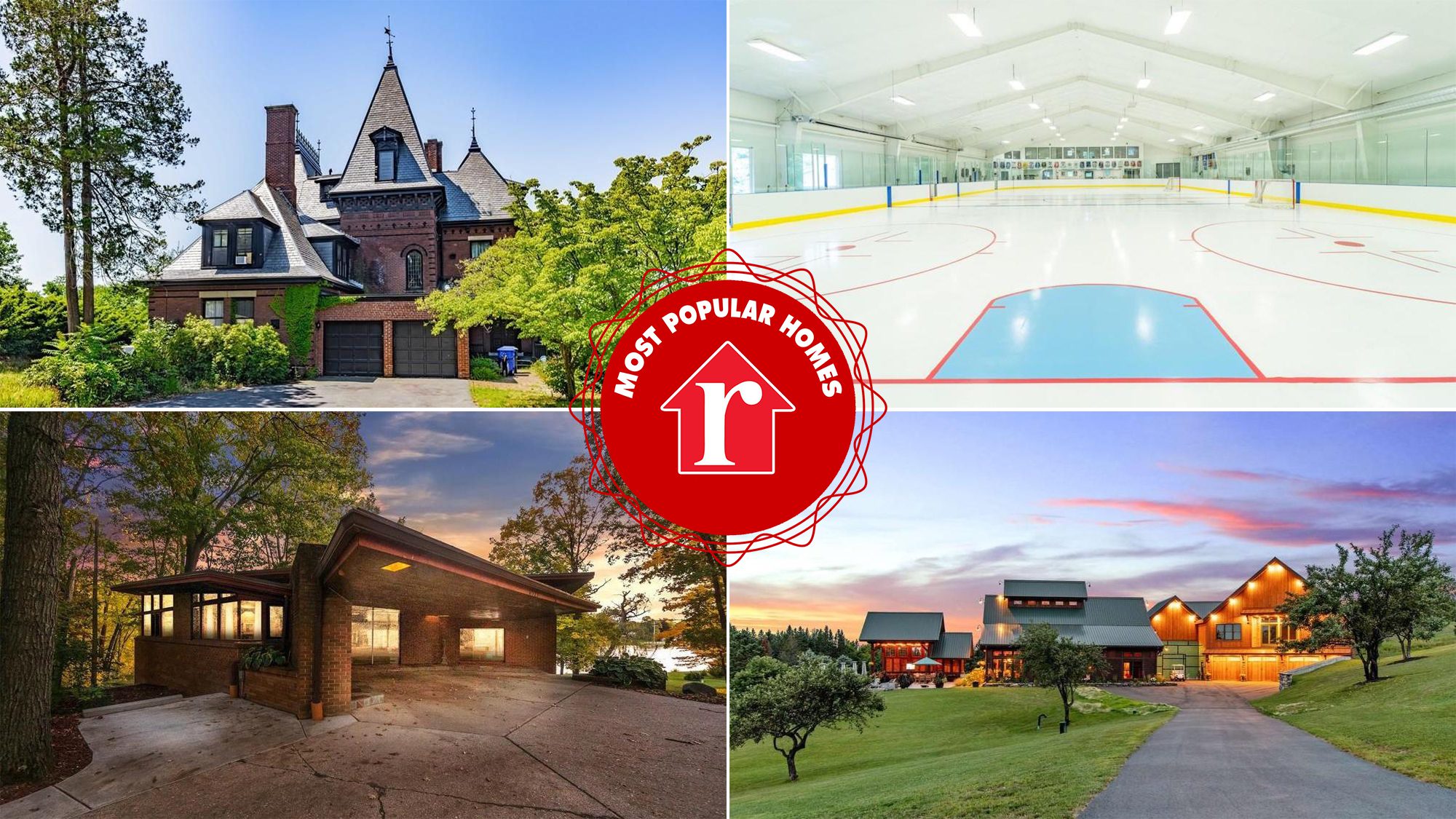
Slap Shot! Connecticut Compound With Hockey Rink Is the Week’s Most Popular Home

most popular homes 10/23

realtor.com

It’s an NHL fantasy camp come to life. You can work on your slap shot without ever setting foot outside your property!

A Connecticut compound with a hockey rink skated away with the title of most popular property on realtor.com® this week.

On the market for a little over a month, the one-of-a-kind offering continued to gather up clicks from folks who dream of putting on a power play in the privacy of their own home.

The professional-grade hockey rink even comes complete with its own Zamboni. The property also boasts two guesthouses and a pool, for those who aren’t interested in lacing up the skates.

However, it’s the building built for hard-checking action that makes this a can’t-miss home.

Outside the rink, you took the time to click on a few other extreme homes this week. Interest in a massive 8,400-square-foot barndominium in Iowa spiked, as did clicks for a spectacular 1960s lemon-lime waterfront time capsule in Oklahoma, and a midcentury masterpiece in Michigan perched on the private Lake Helene.

In the wise words of the office philosopher Michael Scott (or was it hockey legend Wayne Gretzky?): “You miss 100% of the shots you don’t take.”

With that in mind, we’d like you to take a shot at perusing all of this week’s most popular homes…

10. 305 Old Forge Rd, Pine Grove, PA

Price: $200,000

Why it’s here: Spanning 5 acres, this property is called the Forge, and is headed up for auction at the end of the month. The six-bedroom main house offers 6,022 square feet of living space and has been sitting vacant for years.

Built in 1800, the home is filled with built-ins, beamed ceilings, exposed stone, and other vintage details. But the bathrooms have seen some quirky upgrades over the years, and this one-of-a-kind property is ready to be reimagined.

Pine Grove, PA
Pine Grove, PA

realtor.com

———

9. 21698 Tollhouse Rd, Clovis, CA

Price: $315,000

Why it’s here: East of Fresno, CA, this nearly 6-acre mountain hideaway includes a five-bedroom home built in 1936.

The two-story house has a fireplace, galley kitchen, remodeled bathrooms, as well as new paint and carpet. Outside, there’s a porch for relaxing.

Clovis, CA
Clovis, CA

realtor.com

———

8. 6325 Meadowwood Ln, Grand Blanc, MI

Price: $499,900

Why it’s here: Inspired by Frank Lloyd Wright and sitting on nearly a full acre on Lake Helene, this midcentury marvel is awash in natural wood everywhere. There are also walls of windows and built-ins galore.

The home was built in 1956 using cantilever construction methods, and many of its original details are still in pristine condition. There’s also a basement, which opens onto a rock garden.

Grand Blanc, MI
Grand Blanc, MI

realtor.com

———

7. 670 Reed Rd, Colebrook, NH

Price: $1,550,000

Why it’s here: A turnkey buy! All the furnishings are included in the purchase price of this prime 23-acre piece of property with a 3,273-square-foot post-and-beam home built in 2014.

The custom-built home features poplar bark walls, barn boards sourced from local farms, hickory floors, Ponderosa chandeliers, and hand-made furniture.

Other highlights include a fieldstone fireplace, a kitchen with granite island, stone patio, and outdoor kitchen.

Colebrook, NH
Colebrook, NH

realtor.com

———

6. 2697 Niagara Trl, Logan, IA

Price: $799,000

Why it’s here: This barndo building was erected in 2000. It’s since been converted into an 8,400-square-foot home with all sorts of high-end creature comforts, like a custom kitchen, home theater, fenced pool area, and home gym.

The nearly 8-acre property offers plenty of room to expand, should a buyer desire to go even bigger. The west section of the home includes a shop, garage, and storage area.

Logan, IA
Logan, IA

realtor.com

———

5. 923 Ormewood Ave SE., Atlanta, GA

Price: $400,000

Why it’s here: Built in 1998 and filled with upgrades, this move-in ready three-bedroom home is designed for indoor-outdoor living.

Surrounded by leafy, mature trees, this classic and crisp home is located just blocks from trails, Zoo Atlanta, and parks.

Atlanta, GA
Atlanta, GA

realtor.com

———

4. 220 Maple St, Springfield, MA

Price: $339,000

Why it’s here: Built in 1874, the Loomis-Wesson Home was designed by the firm commissioned for Harvard’s Memorial Hall.

Today, the eight-bedroom residence is in need of a few repairs and some cosmetic touch-ups.

According to the listing details, it’s been well-maintained and updated over the years, but could use a fresh set of eyes.

Original details include wood paneling, French doors, fireplaces, built-ins, and a grand staircase.

Springfield, MA
Springfield, MA

realtor.com

———

3. 2151 London Groveport Rd, Grove City, OH

Price: $1 

Why it’s here: Don’t let the low price fool you! You will need to outbid the competition to win this Ohio home. It’s headed to the auction block with an opening bid of just a single buck, and a savvy bidder could walk away with a serious bargain.

The four-bedroom home sits on 7.5 acres, but there are no interior photos to help us even guesstimate how much this place might be worth.

Along with the house, a winning bid will acquire an outbuilding, pasture, and attached garage.

Grove City, OH
Grove City, OH

realtor.com

———

2. 446482 E. Fishermans Rd, Gore, OK

Price: $299,000

Why it’s here: Open the door and walk back into a different era! This time-capsule home from 1960 isn’t just a vintage decor dream, it’s also a waterfront retreat on Lake Tenkiller.

Along with the purchase price of the three-bedroom lemon-lime fantasy, you can also negotiate to buy all the furnishings.

Gore, OK
Gore, OK

realtor.com

———

1. 503 Studio Rd, Stamford, CT

Price: $7,690,000

Why it’s here: Put the biscuit in the basket any time you like!

This estate has a lot going for it: 13 private acres, 2 guesthouses, and a pool. However, it’s the full-sized professional hockey rink that has puck-minded dreamers buzzing.

The rink building has everything a buyer would need to live out an NHL fantasy: heated team benches, a lighted scoreboard, home and visitors’ team locker rooms, a sound system for announcements, a viewing lounge, and even a Zamboni to keep the ice in pristine shape.

Stamford, CT
Stamford, CT

realtor.com

The post Slap Shot! Connecticut Compound With Hockey Rink Is the Week’s Most Popular Home appeared first on Real Estate News & Insights | realtor.com®.


via Slap Shot! Connecticut Compound With Hockey Rink Is the Week’s Most Popular Home

Thursday, October 22, 2020

September 2020 Market Report & Weekly Market Data (Through Oct. 10)

Home values have grown at a breakneck pace since June, driven by an extreme lack of inventory and incredibly high demand, further cementing the housing market's overall strength amid an uncertain economy. But while for-sale housing remains hot, the rental market just keeps getting colder. 

Monthly Home Value Growth Hits Highest Level Since Mid-2000s Housing Boom

  • The typical U.S. home value rose to $259,906 in September, up a whopping 0.8% from August — the fastest monthly growth pace since November 2005, in the midst of the last housing boom. 
  • For the third month in a row, typical home values were up in every major U.S. metro in September compared to August, with increases ranging from 0.5% in Orlando to 1.5% in San Jose. Monthly growth accelerated in 39 of the top 50 metros.
  • Home values were up 2.2% from June, the largest quarterly increase since October 2013, and up 5.8% year-over-year. Annual growth was fastest in Phoenix (11.7%), San Jose (11.5%) and Seattle (10.7%).

Homes Sold Incredibly Quickly in September, Regardless of Price — Defying Seasonal Norms

  • The typical U.S. home sold in just 16 days in September, down from 17 in August and 28 days in September 2019. Among the 50 largest markets, homes sold fastest in Columbus, Cincinnati, Kansas City and Indianapolis (all five days or less), and slowest in Nashville (36 days),  New York (28), Virginia Beach (28), and San Antonio (27).
  • Entry-level and mid-market U.S. homes (priced from $186,000-$344,000) sold fastest, at 14 and 16 days, respectively. The most-expensive U.S. homes ($488,000 and up) took the longest to sell, at 33 days (down from 47 a year ago).

Rents Continue to Slump, Especially in Pricey Markets

  • Typical monthly U.S. rent was $1,756 in September, up just 0.9% year-over-year, the second-lowest annual rate since at least 2015 and well below 4% annual growth rates recorded prior to the pandemic in February. 
  • Rent was down the most year-over-year in September in some of the nation's priciest rental markets, falling 6% in New York, 5.9% in San Francisco and 4.5% in San Jose. Meanwhile, rents were up strongly year-over-year across much of the Midwest and Sun Belt, with the biggest annual gains among large markets recorded in Memphis (8.7%), Phoenix (7%) and Riverside (6.9%). 
  • U.S. typical rents fell 0.1% month-over-month, a slightly smaller monthly decline than the 0.5% dip from July to August.

Median List & Sale Prices Continue to Skyrocket

  • As of the week ending Oct. 10, the medium list price nationwide was up 11.6% year over year.
  • Sale prices are also rising incredibly quickly, in line with list prices: For the week-ending August 29 (the most recent data available), the U.S. median sale price was up 10.2% from the same week in 2019. At the same time, median list price was up 9.2%.
  • Two intertwined factors contribute to the recent spike in list prices: (i) sale prices for the most expensive homes are accelerating faster than sales price for less expensive homes; and (ii) the most expensive homes are sitting on the market longer than less expensive homes. 

Inventory Continues to Plummet

  • For-sale inventory nationwide fell 1.2% week-over-week in the week-ended Oct. 10, and was down 36.4% from a year ago.
  • Inventory last week was down year-over-year in all 50 of the nation's largest markets, with the biggest drops recorded in Salt Lake City (-48.3%), Riverside (-47.6%) and Charlotte (-47.1%).

Home value growth expected to continue accelerating in coming months

  • We expect seasonally adjusted home values to increase 2.9% between September and the end of 2020, and rise 7% in the 12 months ending September 2021. This forecast is notably more optimistic than previously: Our prior forecast called for a 4.8% rise between August 2020 to August 2021.
  • Historically low levels of for-sale inventory teamed with robust buyer demand and mortgage rates that remain near historic lows should continue to place upward pressure on prices. 

2020 home sales likely peaked in September, expected to reaccelerate early next year

  • Our forecast suggests that closed home sales reached a recent high in September, and will temporarily slow down in coming months, falling to pre-pandemic levels by January 2021. Growth is then expected to resume next spring and to remain firmly above pre-pandemic volume through most of next year.
  • This short-term deceleration in sales volume can be attributed in large part to an expected slowdown in GDP growth, the fading impact of historically low mortgage rates, fewer sales occurring that were deferred from earlier this year and historically low levels of for-sale inventory. An expected reacceleration of GDP growth in 2021 should help push sales volumes higher.

Methodology

The Zillow Weekly Market Reports are a weekly overview of the national and local real estate markets. The reports are compiled by Zillow Economic Research and data is aggregated from public sources and listing data on Zillow.com. New for-sale listings data reflect daily counts using a smoothed, seven-day trailing average. Total for-sale listings, newly pending sales, days to pending and median list price data reflect weekly counts using a smoothed, four-week trailing average. National newly pending sales trends are based upon aggregation of the 38 largest metro areas where historic pending listing data coverage is most statistically reliable, and excludes some metros due to upstream data coverage issues. For more information, visit www.zillow.com/research/.

Click here to read past editions of Zillow's Weekly Market Report.

The post September 2020 Market Report & Weekly Market Data (Through Oct. 10) appeared first on Zillow Research.


via September 2020 Market Report & Weekly Market Data (Through Oct. 10)

Was Prince Harry and Meghan Markle’s New Home Really Up for Rent by the Hour?

Prince Harry and Meghan Markle

WPA Pool / Pool / Getty Images

After much soul-searching and globe-trotting, Prince Harry and Meghan Markle have finally settled into their first home—a mansion in Santa Barbara, purchased in August for $14.65 million.

Just one question: As officially “financially independent” ex-royals, who no longer receive funding from the Sovereign Grant, how will they pay for such a palatial property? Here’s one idea: They could rent out their place by the hour.

In fact, that may already have been happening. On Oct. 16, the Daily Star reported that long before Harry and Markle had moved in, back in August, their property was up for rent on the film location site Giggster for $700 an hour.

And even after the Duke and Duchess of Sussex moved in, their house allegedly remained up on Giggster, only to disappear abruptly once the British press pounced on the story.

Tatler notes that the listing now reads, “Sorry, this location was unpublished.”

Just 90 miles north of Los Angeles, the couple’s 18,000-square-foot estate comes with nine bedrooms and 16 bathrooms, plus a pool and tennis court.

Clearly, it would be a splendid spot not only for filming movies, but weddings, fundraisers, and other events that call for a gorgeous backdrop.

Still, given that hordes of royal fans and paparazzi would no doubt pay any price to get a peek at this famously private couple’s new digs, you have to wonder: Are these rumors about their residence even true?

Giggster did not respond to our request for comment, but some real estate experts say that given both Harry and Markle’s current financial belt-tightening and the cost of maintaining this massive home, renting it out by the hour could make a whole lot of sense.

Keep it clean, people! There’s to be no stripping down in this rental home

Google Maps

Why Harry and Meghan may want to rent out their place

As strange as it may seem that wealthy people would need to rent out their massive mansions, it’s surprisingly common, particularly in a posh neighborhood near Los Angeles like Santa Barbara.

“Santa Barbara County has dozens upon dozens of scenic houses that you can rent by the day for a variety of reasons,” adds Tyler Drew, CEO of Anubis Properties in Los Angeles.

“This includes wedding destinations with on-site catering and weekend getaways. Some are open to the public, and others are only available if you know the owners personally.”

Given that Harry and Meghan are likely to be traveling quite often, renting out their home while they’re away could help fund their lavish lifestyle.

“They probably need the money, since their exodus from royal status and the overhead required for keeping up a mansion like this is extremely costly,” posits Cara Ameer, a real estate agent with Coldwell Banker in Los Angeles.

While a $700 price tag doesn’t seem that steep, keep in mind that when the listing was reportedly up, the property had mandated a 10-hour minimum in the fine print, designed to eliminate anyone who wasn’t a serious financial player in the film business.

“The message here is to make sure you have deep pockets or go home—tire-kicking production companies need not apply,” says Ameer.

Other stipulations on the Giggster listing, understandable in the pandemic, were that the group visiting must be limited to a maximum of 15 people—with further bans on smoking, pets, and alcohol (which could make for a rather dull soiree).

The risks Meghan and Harry could face renting out their home

Probably the biggest concern if the couple were to rent out their house would be security clearances.

“There’s a tremendous amount of vetting that goes on each time a film or photo shoot is arranged,” says Ameer.

In addition to privacy issues, “There’s potential for wear and tear on the property, and security is a huge issue when you’re allowing access to outsiders onto the grounds.”

The Giggster listing also reportedly stipulated that one type of filming would definitely not be allowed on the premises: porn. Which makes sense, although shockingly, adult films are not always a no-no for wealthy homeowners who rent out their pads in this manner.

“If it’s a flashy, rockstar kind of property, then perhaps the porn thing may actually help the home’s marketability,” says Ameer. “But not so much if it’s a place that’s geared toward families.” Or displaced royals, apparently.

The post Was Prince Harry and Meghan Markle’s New Home Really Up for Rent by the Hour? appeared first on Real Estate News & Insights | realtor.com®.


via Was Prince Harry and Meghan Markle’s New Home Really Up for Rent by the Hour?